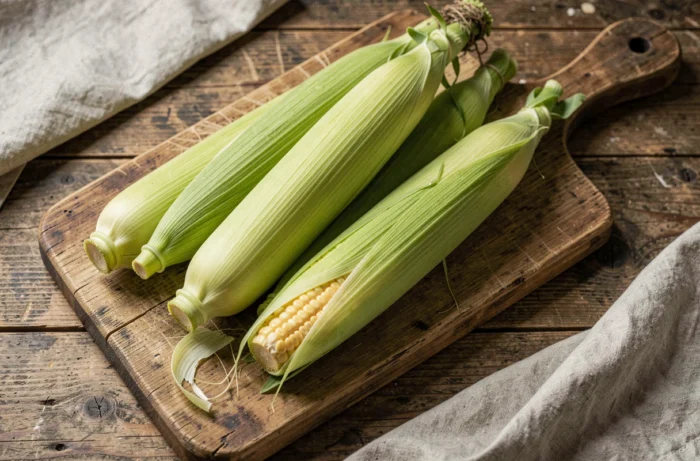
When you come across the word “cobette” on a fast-food menu or in an online recipe, the first reaction is often the same: what exactly are we talking about? A cobette refers to a half-ear of sweet corn, cooked and served as is, with or without seasoning. The term has gained popularity in France thanks to KFC’s menu, but it encompasses a much broader culinary practice that has been rooted in North American cuisine for a long time.
Homemade cobette: the choice of corn makes all the difference
You can buy an ear of corn at the supermarket, cut it in half, and consider it a cobette. Technically, that’s true. In practice, the result depends almost entirely on the freshness of the starting product.
The sugars contained in sweet corn kernels transform quickly after harvest. An ear picked several days ago becomes more starchy, less sweet, and the final texture is nothing like that of a fresh ear. To achieve a sweet and crunchy cobette, you need to cook the ear quickly after purchase.
The most reliable indicator remains the leaves surrounding the ear. If they are still green and tightly wrapped, the corn has been harvested recently. If they are dry or missing, it’s better to pass. As the definition of cobette on Oh My Food states, this term refers to a half-ear of corn prepared to be eaten directly with your fingers.
Out of season (roughly from October to June in France), frozen corn often constitutes a better choice than fresh ears that have been stored too long on the shelf. Frozen ears are blanched and frozen shortly after harvest, which locks in the sugars at a favorable stage.
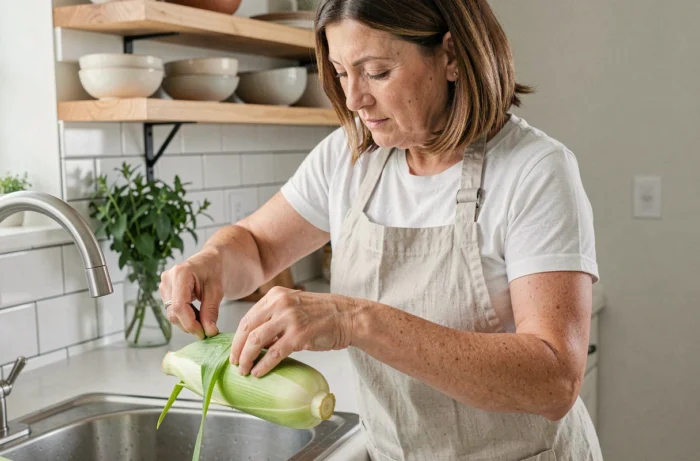
Cooking the cobette: steam, oven, or barbecue
Most online recipes suggest using the oven or barbecue. These are good options, but we often overlook a more subtle method: steaming preserves the taste of the corn without diluting it.
Why avoid the large pot of water
Dipping an ear in a large volume of boiling water for ten minutes is the most common technique. The problem: some of the sugars and flavors migrate into the cooking water. You end up with bland corn, especially if you let it soak too long.
Steaming solves this issue. You place the half-ears in a steamer basket, cover it, and in about ten minutes, the flesh is tender without losing its flavor. This method has another advantage: it keeps the surface dry, allowing you to quickly sear the cobette in the oven or pan to add grilled notes.
Oven and barbecue: the winning duo for texture
In the oven, you wrap each cobette in aluminum foil with a knob of butter and spices. Cooking lasts about twenty minutes at high temperature. The butter melts, infusing the kernels, and the concentrated heat lightly caramelizes the sugars on the surface.
On the barbecue, you place the cobettes directly on the grill. The kernels get grill marks and develop a smoky flavor that completely changes the flavor profile. Opinions vary on the ideal cooking time on the barbecue, as it depends on the intensity of the coals, but about fifteen minutes with regular rotations usually yields good results.
- Steam then pan: firm texture, concentrated flavor, ideal as a side for a light meal
- Oven in foil with butter and spices: rich flavor, even cooking, suitable for large batch preparation
- Direct barbecue on the grill: smoky notes, caramelized crust, perfect for outdoor meals
Seasoning the cobette: three directions that work
Sweet corn has a fairly neutral taste that absorbs seasonings well. You can go in very different directions depending on the meal.
The classic butter-salt works because it’s simple. The fat from the butter mixes with the sugars in the kernels, and the salt enhances it all. Nothing more to add if the corn is fresh and well cooked.
For a spicier profile, mix smoked paprika, a hint of chili, and a squeeze of lime juice. This combination recalls Mexican elotes (corn ears sold on the street) and transforms a basic cobette into a side with character.
Third option: a mix of fresh herbs (chives, parsley, cilantro) with a drizzle of olive oil. This is the lightest version in terms of fat and the one that best highlights a well-sweetened seasonal corn.
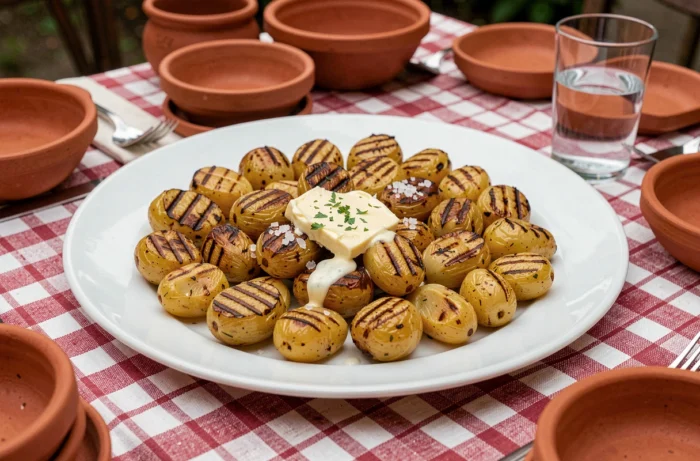
Cobette and balanced diet: what we really eat
The cobette has a reputation for being a healthy side, especially compared to fries or potato wedges on a fast-food menu. This is partly true. Sweet corn is a natural starch, a source of fiber and B vitamins.
What shifts the nutritional profile is the seasoning. A plain steamed cobette remains a moderate-calorie side. The same cobette drowned in butter and sprinkled with cheese becomes a dish significantly richer in fat.
- Plain or with a squeeze of lemon: light side, suitable for a balanced meal
- Melting butter and salt: superior flavor, significantly higher caloric intake
- Butter, grated cheese, and sauce: the seasoning can double the caloric intake of the cobette
For a homemade meal, you can control these parameters. In a restaurant or fast food, the recipe is fixed and often generous in fats.
The cobette remains one of the few fast-food products made from a single recognizable ingredient. Whether you choose to prepare it at home with a fresh ear or order it at the counter, the quality gap hinges on two factors: the freshness of the corn and the amount of added fat. Everything else is a matter of personal taste and cooking method.