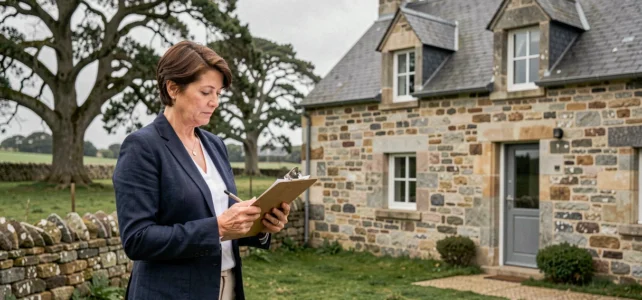
An old renovated apartment in downtown Lorient, a rehabilitated longère in Trégor, a converted rental building in Redon: in Brittany, ethical and responsible real estate is not just about slapping a label on a new development. We are talking about concrete operations, grounded in recent regulatory constraints, that change the way to set up a real estate investment project in the region.
ZAN Objective in Brittany: What Land Sobriety Means for an Investor
Since the Climate and Resilience Law of 2021, supplemented by the law of July 20, 2023, real estate projects in Brittany must align with a trajectory of halving the consumption of natural spaces from 2021 to 2031, with a goal of zero net artificialization by 2050. In practice, this gradually closes the door to suburban extension developments.
For an investor, the direct consequence is simple: the viable operations are now those of controlled densification, conversion of brownfields, and real estate recycling. Buying a vacant plot on the outskirts of a town to build rental housing is becoming riskier, as urban planning permissions tighten.
Browsing the real estate offerings from Breizh Equitable, one can see that the properties offered prioritize these rehabilitation and enhancement logics, in line with the Breton ZAN trajectory.
The DREAL Brittany has also observed a significant increase in authorized housing between July 2025 and June 2026 (+14.9% in Brittany, compared to +9.9% in France). This dynamic shows that construction is not stopping, but shifting towards urban renewal.
Concrete Criteria for Responsible Real Estate Investment in Brittany
The word “ethical” can cover just about anything. On the ground, we distinguish verifiable criteria that separate a truly responsible project from mere marketing display.
Energy Performance and Renovation of Old Buildings
Brittany has a significant stock of old buildings. Renovating a thermal sieve to bring it up to level D or C of the energy performance certificate (DPE) is one of the most direct levers for responsible investment. It simultaneously impacts the property’s value, the tenant’s comfort, and overall energy consumption.
Returns vary on this point depending on the condition of the building and the original materials (granite, rammed earth, slate), but a well-conducted renovation in Brittany generally allows for maintaining a cost price consistent with local rental prices.
Socially Responsible Impact: Accessible Housing
A socially responsible investment in Brittany also involves the choice to produce accessible housing. This includes residences adapted for seniors, solidarity housing, or projects in temporary bare ownership with a social landlord.
This type of arrangement often offers a discount at purchase (bare ownership involves giving up rents for a defined period) in exchange for regaining full ownership of the property in the long term, without property management fees.
Biosourced Materials and Local Supply Chains
Prioritizing Breton wood, hemp, or cellulose wadding in renovation work is not just a showcase argument. These materials reduce the carbon footprint of the construction site and support regional economic sectors. Several Breton operators now incorporate these criteria into their specifications.
Life Annuity and Bare Ownership: Arrangements Suited to Ethical Real Estate in Brittany
Life annuities and bare ownership are not discussed enough in the context of responsible investment, even though these arrangements address several ethical issues simultaneously.
A life annuity allows a senior owner to stay in their home while receiving a lump sum and an annuity. For the investor, the purchase price includes a discount related to occupancy, making the operation accessible without massive recourse to credit. The seller retains their living environment, while the buyer acquires a property at a price below the market.
Temporary bare ownership with a social landlord works differently: one buys the property at a discount (often around a third according to agreements), the landlord manages and maintains the housing during the dismemberment period, and then full ownership is regained. No management issues, no rental vacancy, and social housing produced without mobilizing public funds.
These two formulas share a common point: they align the financial interest of the investor with a measurable social benefit.
Conversion of Brownfields and Real Estate Recycling in Brittany: Where to Look
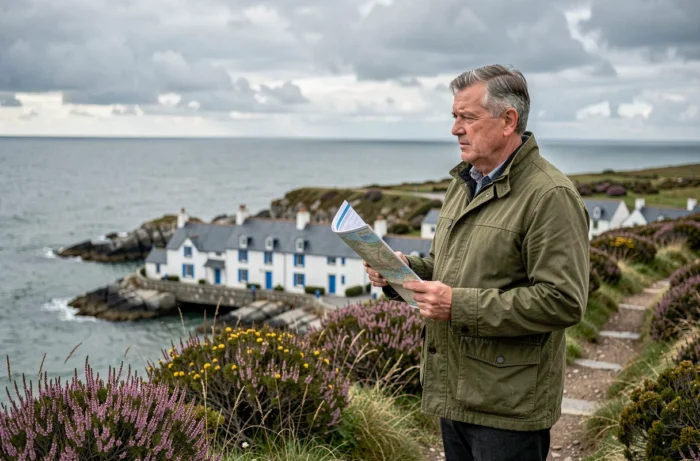
Real estate recycling is the natural playground for ethical investment in Brittany. Instead of consuming agricultural land, we transform what already exists.
- Former military or port sites in coastal towns (Brest, Lorient) are subject to conversion programs that mix housing, activities, and public spaces.
- The depopulated town centers of central Brittany offer opportunities for purchase-renovation at contained prices, with tax incentives like the Denormandie law in eligible municipalities.
- Commercial brownfields at the city entrance, gradually transformed into mixed-use programs, allow for densification without artificialization.
The ZAN trajectory mechanically pushes the prices of already urbanized land upward. Investing now in conversion, before the scarcity of buildable land fully reflects in prices, is both an ethical and financial decision.
Check the Viability of a Responsible Real Estate Project Before Investing
A project that presents itself as ethical must be able to prove it. Before signing, check a few concrete points:
- The projected DPE after work, not just the current label. A program that promises renovation without indicating the targeted energy class lacks transparency.
- The origin of materials and any use of certified local supply chains (Brittany Wood label, Breton hemp).
- The bare ownership agreement or life annuity contract: check the clauses for rent revaluation, the conditions for releasing the property, and the solidity of the partner landlord.
- The overall financing plan, including energy renovation aids (MaPrimeRénov’, eco-PTZ) that reduce the remaining cost.
Ethical real estate in Brittany does not require sacrificing profitability. It demands rigor in the choice of property, arrangement, and partners. The regulatory constraints related to ZAN and energy transition only reinforce this requirement, steering the market towards more virtuous operations by construction.