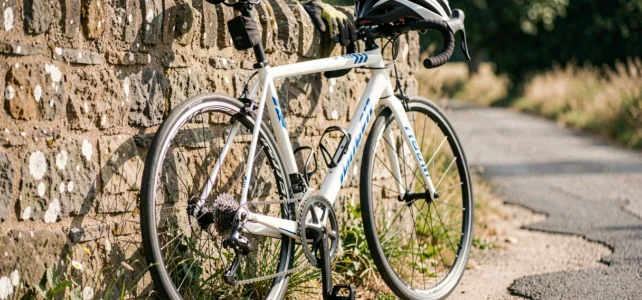
The Triban RC 120 is the best-selling entry-level road bike at Decathlon. Its affordable price attracts beginners, but this accessibility makes it tricky to compare with other models. Comparing a bike isn’t just about reading a spec sheet: you need to know which criteria really matter based on your use, and which are just marketing.
Transmission and Gearing of the Triban RC 120: The Criterion That Product Sheets Don’t Detail Enough
When comparing two entry-level road bikes, the first instinct is to look at the frame or weight. However, the transmission group deserves much more attention because it determines what you can actually do with the bike.
The RC 120 is equipped with a Microshift 2×8 speed group. In practice, this means 16 gear combinations. Cyclists engaged in travel or heavily loaded bikepacking projects report a concrete limitation: the 44-tooth chainring paired with a cassette that does not exceed 28 teeth makes long climbs with panniers very difficult.
Before comparing the Triban RC 120 to other bikes, ask yourself this question: what will this bike be used for on a daily basis? For flat urban commutes and leisure rides on the weekend, this transmission is more than sufficient. For climbs or loaded travel, a competitor equipped with Shimano Claris (also 2×8, but with a wider cassette, often 11-34 teeth) will offer a significantly more comfortable gear range for climbing.
The gear range matters more than the number of speeds. Two 2×8 bikes are not equal if one offers an 11-28 cassette and the other an 11-34. Always check the details of the cassette and chainrings, not just the number of speeds displayed.

Carbon or Aluminum Fork: The Real Impact on Road Comfort
The RC 120 features a carbon fork. At this price point, it’s a significant advantage (literally). A carbon fork better filters vibrations from the pavement than an aluminum fork. The result: less fatigue in the arms and shoulders on rides longer than an hour.
Why does this point deserve your attention during a comparison? Because several competing bikes sold at the same price still have an aluminum fork. The difference isn’t immediately obvious on a spec sheet, but you can feel it physically after thirty kilometers.
A carbon fork at this price is a concrete advantage of the RC 120. If a competing model offers an aluminum fork, it will need to compensate in other areas (better transmission, more effective brakes, geometry better suited to your build) to remain competitive.
6061 Aluminum Frame: What It Means in Practice
The frame of the RC 120 is made from 6061 T6 aluminum. This is a standard alloy in this price range, found in most competitors. Comparing aluminum frames at this price doesn’t yield much: the differences in stiffness and weight are marginal.
Focus your comparison on other aspects. The frame becomes a discriminating factor when a competitor offers steel (heavier but more comfortable over long distances) or a different alloy.
Geometry and Size: Compare What You Feel on the Bike
You may have noticed that two bikes labeled the same size (M or L) do not position themselves the same way once mounted. Geometry, meaning the angles and lengths of the frame, determines your posture.
The RC 120 adopts a comfort-oriented geometry with a relatively upright position. The stack (height) is generous compared to the reach (length), which places the rider in an upright posture. For a beginner or a commuter, this is a relevant choice: less pressure on the wrists, better visibility in the city.
A competitor like an entry-level Trek bike or another road model may offer a sportier geometry, with a more inclined torso. Before comparing prices, compare the postures. Here are the measurements to check:
- The stack and reach: they define your sitting position. A high stack and short reach provide a comfortable posture. The opposite pushes toward an aerodynamic position, which is less pleasant for beginners.
- The length of the stem: a short stem compensates for a reach that is too long. If the bike you are trying requires an immediate stem change, it means the size is not right.
- The saddle height relative to your inseam: the simple rule is to multiply your inseam by 0.885 to get the approximate saddle height. This calculation works regardless of the model.
Triban, Van Rysel, Decathlon: Understanding the Brand Transition
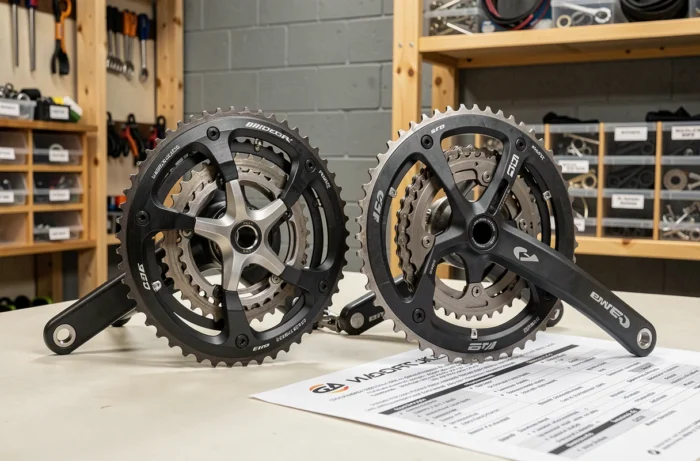
A common point of confusion: the Triban brand is in the process of being phased out. Since 2024, Decathlon has been reorganizing its bike ranges under the brands Van Rysel (performance road and gravel), B’Twin (urban and leisure), and Rockrider (mountain bikes).
The RC 120 as we know it is at the end of its life. The next version is expected to be marketed under the Van Rysel brand, with a Shimano Claris group replacing the Microshift. This switch to Shimano Claris represents a notable improvement in terms of shifting precision and compatibility with common replacement parts.
If you compare the current RC 120 with a competing model, keep in mind that the Van Rysel successor will likely be priced higher. The Microshift RC 120 still available in stores or on the second-hand market therefore represents a value-for-money proposition that is hard to beat for leisure and commuting use, provided you accept its limitations on loaded climbs.
Used or New: A Comparison Criterion Often Overlooked
Comparing a new RC 120 with a competing bike is not enough. A used RC 120 in good condition can free up budget for upgrading the cassette or tires. The Decathlon second-hand market (available directly on their site) regularly offers refurbished RC 120s. With the savings made, replacing the cassette with a model offering a wider range or fitting higher quality tires can radically change the riding experience.
The choice between the RC 120 and a competitor rarely hinges on a single criterion. The carbon fork favors comfort, the Microshift transmission limits mountain use, and the comfort geometry suits beginners. Identify your primary use, check the gear range, and physically try the bike before deciding. The rest is detail.