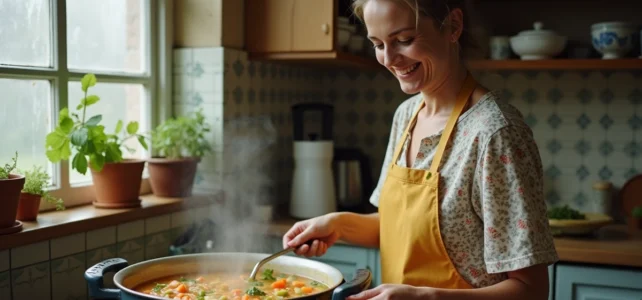
Open the fridge, notice there are three potatoes, half an onion, and a bit of olive oil left: this situation resonates with many households. Yet, these leftovers are enough to create a decent meal, sometimes even delicious. Easy and free recipes do not rely on a magic trick, but on a simple logic: use what you already have, salvage what others throw away, and cook with minimal energy.
Foraging Cuisine: Free Ingredients that Change the Meal
Have you ever noticed the crates of slightly damaged fruits left in front of greengrocers at the end of the market? These products, still perfectly edible, end up in the trash if no one takes them. Foraging cuisine involves reclaiming these surpluses to make the basis of real dishes.
There are several sources of free supplies available every day. Redistribution apps for unsold goods, like Too Good To Go, offer baskets at symbolic or even no cost depending on the operations. End-of-market remains the most direct channel: some farmers are happy to give away their unsold items of the day rather than take them back.
The surpluses from AMAP (Associations for the Maintenance of Peasant Agriculture) provide another avenue. When a basket is not collected by its subscriber, the vegetables are often redistributed. Additionally, you can find concrete ideas on cuisine-gratuite.com to transform this type of harvest into evening meals.
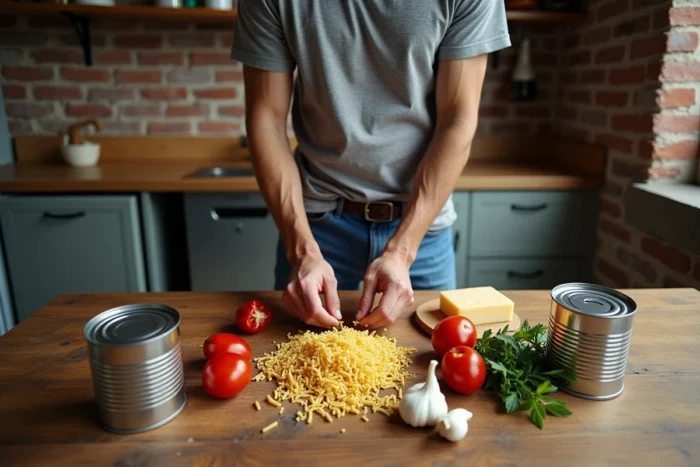
This approach requires a small change in habit: accepting not to choose your ingredients in advance. The menu is built from what you find, not the other way around. It’s a constraint, but it leads to combinations you would never have tried otherwise.
Three-Ingredient Meals: The Frugal Routine that Lasts the Week
The principle is simple. You take a carbohydrate (potatoes, pasta, rice, lentils), an aromatic (onion, garlic, garden herb), and a fat (oil, butter). With these three elements, you get a complete dish.
Pasta, garlic, and olive oil form the most well-known example. In Italy, aglio e olio is a classic, not a crisis meal. Sautéed potatoes with a sliced onion and a pinch of pepper yield equally satisfying results.
Planning one or two “frugal” evenings per week helps ease the budget without it feeling like a deprivation. When this type of meal becomes an accepted ritual rather than a backup solution, it is prepared better and enjoyed more.
- Boiled lentils with an onion sautéed in a bit of oil: a dish rich in plant protein, ready in about twenty minutes
- Pilaf rice with garlic: sauté the dry rice in fat with garlic, then add water and cook covered
- Potato and leek soup (or any salvaged vegetable): blend everything with cooking water to create a velvety soup without cream
A well-seasoned three-ingredient meal is better than a failed complicated dish. Pepper, salt, and a fresh herb are enough to enhance any base.
Wild Herbs and Free Aromatics: Flavor Without the Cost
Budget recipes often talk about the price of vegetables or proteins. They overlook a category that can drop to zero: aromatics.
Dandelion, nettle, plantain, or wild thyme grow in most gardens, parks, and along paths. These edible plants transform a bland dish into something flavorful, at no cost. A few blanched nettle leaves added to a soup or pasta work just like spinach.
Before foraging, keep two precautions in mind:
- Avoid busy road edges and areas treated with pesticides: a regularly mowed municipal park is not a good spot
- Only pick what you can identify with certainty: wild parsley resembles hemlock, and the confusion can be serious
- Wash any foraged items thoroughly, even in clean areas, to eliminate potential pests
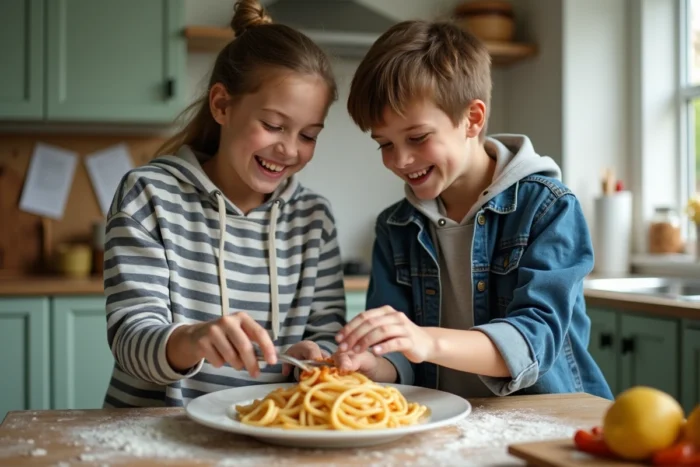
A small pot of thyme or basil on a windowsill produces aromatics for several months. The initial investment is negligible, and the flavor yield far exceeds that of a tube of dried herbs from the supermarket.
Energy-Efficient Cooking: Reducing the Energy Bill in the Kitchen
Cheap recipe articles focus on the price of food. The energy cost, however, is rarely mentioned, even though it weighs increasingly heavier with rising rates.
Consistently covering pots significantly reduces cooking time. Water boils faster, heat is retained better, and the meter runs for a shorter time. It’s a tiny gesture, but applied every day, it makes a real difference on the bill.
Passive cooking works particularly well for pasta and rice. The principle: bring the water to a boil, plunge the food in, turn off the heat, and keep the lid closed. The residual heat finishes the cooking. Pasta takes a few more minutes, but the result is the same for a fraction of the energy consumption.
For legumes (chickpeas, lentils, dry beans), soaking them in cold water for several hours shortens the cooking time by at least a third. A dish of soaked chickpeas cooked the day before cooks much faster than a dry-started dish.
The last often-overlooked lever: grouping cooking. If the oven is on for a potato gratin, slipping in a homemade bread or vegetables to roast at the same time makes every minute of heating worthwhile. An oven turned on for a single dish is an underutilized oven.
Cooking without spending requires less culinary talent than organization and attention to what is available around you. Unsold items, garden herbs, fridge leftovers, and a few energy-saving gestures form a coherent system. The cheapest meal is not the saddest: it’s often the one where you’ve shown a bit of ingenuity with what you had on hand.