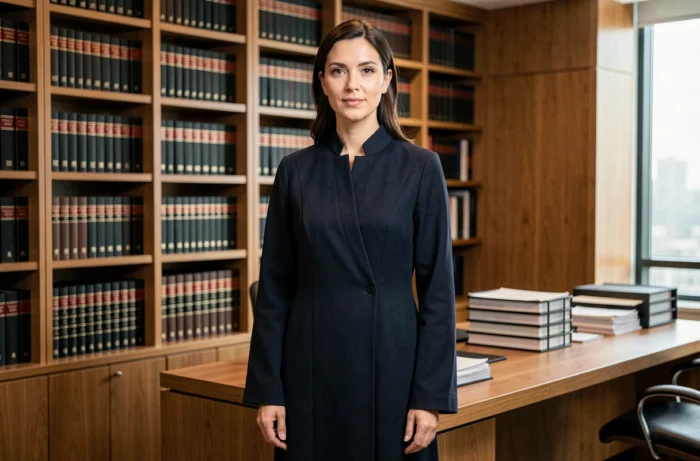
The lawyer’s gown is not just any garment. Its fabric must meet rarely combined requirements: impeccable fit for long hours, resistance to repeated folding in a transport bag, and an impeccable appearance under the often unflattering lighting of courtrooms. Standard guides focus on the drape or initial comfort but overlook what happens after several hours of continuous wear.
Resistance after eight hours of wear: the true criterion of fabric credibility
A fabric may look elegant on a hanger but lose all appeal by the end of the day. The central question for a lawyer who regularly pleads is not the visual appeal at the time of purchase, but the textile’s ability to maintain its structure after a full day in court.
Courtrooms are often overheated in winter and poorly ventilated in summer. Prolonged wear of the gown, over a suit or tailored outfit, generates heat accumulation that some fabrics do not handle well. A fabric that wrinkles or shines after a few hours sends a signal of negligence, even if unintentional.
Fine merino wool, for example, regulates body temperature better than most synthetic fibers. It absorbs moisture without immediately appearing wrinkled. However, it requires more delicate care, which poses a problem for lawyers who plead daily and cannot have their gown dry cleaned every week.
By consulting the fabric advice on Paris Tribu, one can see this tension between elegance and practicality that shapes the entire choice of textile for a gown.
Wool, cashmere, or microfiber: balancing courtroom comfort and frequent maintenance
Three main families of fabrics dominate the lawyer’s gown market. Each serves a different purpose, and the right choice depends less on the initial budget than on the frequency of wear.
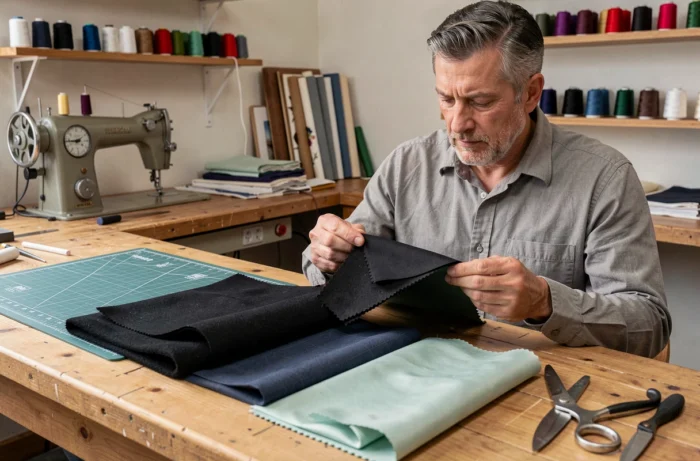
- Synthetic microfiber is the most common choice among young lawyers. Its main advantage: it wrinkles very little and quickly regains its shape after being folded in a bag. It retains less heat than wool, which can be an advantage in summer. Its downside is a sometimes dull appearance under certain lighting, with a less fluid drape than natural fibers.
- Classic or merino wool offers a nobler drape and better thermal regulation. It absorbs moisture, breathes better, and drapes with more depth. The downside: it requires regular dry cleaning and may shine at friction points (shoulders, forearms) after a few months of intensive use.
- Cashmere, positioned at the high end, gives a luminous and silky appearance to the gown. Its touch is incomparable, but its fragility makes it a fabric reserved for lawyers who wear their gown occasionally, during swearing-in ceremonies or solemn hearings. For daily use, cashmere ages quickly.
The choice thus primarily depends on the frequency of use. A criminal lawyer who pleads several times a week does not have the same constraints as a corporate lawyer who puts on their gown once a month.
Transport and folding: a neglected factor in choosing the lawyer’s gown fabric
Most lawyers do not have a changing room at the courthouse. The gown travels in a bag, tote, or cover, often hastily folded between appointments. This daily treatment puts the fabric to the test.
The fabric’s ability to avoid marking creases is as crucial a criterion as its aesthetics. A marked crease on the shoulder or back of the gown remains visible throughout the hearing. Steam ironing can correct some flaws, but few lawyers have the time to iron their gown in the morning before heading to court.
In this regard, microfiber has the advantage. Modern synthetic fibers resist prolonged compression better and regain their shape more quickly than traditional wool. Some manufacturers offer wool-polyester blends that attempt to combine the drape of wool with the resilience of synthetics, but feedback on the actual durability of these blends varies.
Local practices and bar association regulations: what the fabric must also respect
The choice of fabric is not solely based on personal preferences. The internal regulations of bar associations govern courtroom attire, and some local practices influence how the gown is perceived by peers and judges.
The gown must be black, which seems simple. But not all blacks are equal depending on the fiber used. A microfiber black tends toward matte, sometimes slightly grayish after several washes. A wool black retains its depth longer, provided it is properly maintained. Cashmere offers a brighter, almost shiny black that may appear too ostentatious in some bar associations where sobriety is valued.
Several recent sources remind us that the visual state of the outfit matters in professional perception. A gown made of tired fabric or faded black undermines the lawyer’s credibility, regardless of the quality of their arguments. This observation leads some practitioners to own two gowns: one in microfiber for everyday use, and one in wool or cashmere for important hearings.
Weight and lining: technical details that change comfort in court
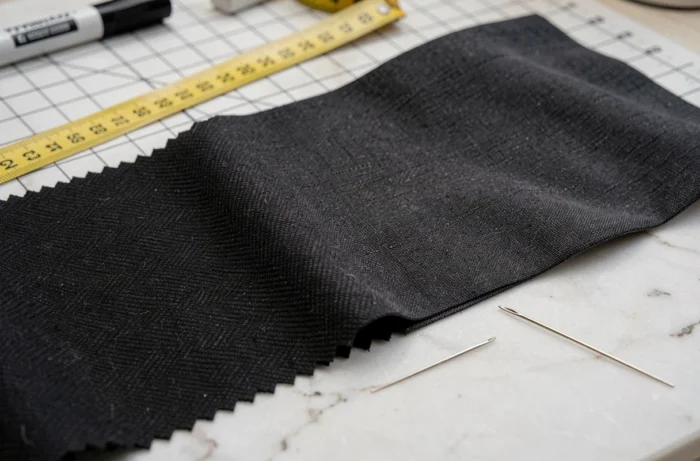
Beyond the type of fiber, the weight of the fabric directly influences wearing comfort. A fabric that is too light lacks structure and floats without elegance. A fabric that is too heavy tires the shoulders after several hours.
The ideal weight lies within an intermediate range, dense enough to ensure a proper drape without adding bulk to the silhouette. Specialized manufacturers adjust this parameter based on the model and fiber chosen.
The lining also plays an underestimated role. A natural silk lining glides better over the clothes worn underneath and reduces friction, making it easier to put on and take off the gown. A synthetic satin lining serves a similar function at a lower cost but retains more body heat. Crepe, being more matte, offers a compromise between the two.
Choosing the fabric for a lawyer’s gown involves balancing partially contradictory constraints: elegance versus durability, thermal comfort versus ease of maintenance, depth of black versus longevity. The answer varies according to practice rhythm, local climate, and the type of jurisdiction frequented. Owning two gowns suited for distinct uses remains, for many practitioners, the most realistic solution.