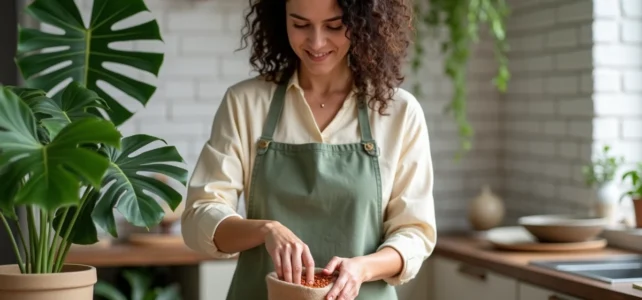
A pot of basil on the windowsill, in the middle of summer, with the potting soil cracking the day after watering. We add a layer of clay balls on the surface, and three days later the soil remains soft, moist to the touch. The clay balls above the plants are not just for decoration: they significantly alter the growing conditions in the pot.
Clay balls on the surface: a mineral mulch that limits evaporation
When we talk about clay balls, the usual reflex is to place them at the bottom of the pot for drainage. Their use on the surface addresses a different issue: reducing the evaporation of water contained in the potting soil.
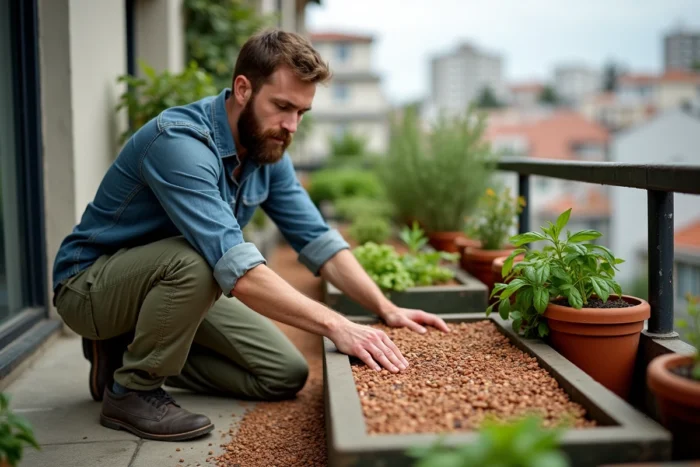
The porous structure of the balls creates a physical barrier between the moist substrate and the surrounding air. In summer, on a south-facing balcony, this layer of a few centimeters slows down the drying of the soil. We water less often, and the potting soil retains a more consistent moisture level between waterings.
This mechanism is similar to that of organic mulching (straw, bark), but with a unique advantage of clay balls: they do not decompose. There is no need to replace them each season. They remain stable, do not mold when in contact with water, and do not alter the soil pH. To understand why to put clay balls on top of your plants, it is this moisture-regulating function on the surface that makes the difference, especially for potted plants.
Root protection against water stress in pots
A pot without a surface cover exposes the potting soil to drastic humidity fluctuations. After a heavy watering, the water evaporates quickly. The superficial roots alternate between saturation and dryness. This repeated water stress weakens the plant, causes leaf yellowing, and slows growth.
The clay balls placed above the potting soil stabilize the moisture in the top few centimeters of substrate. The finest roots, those that actively absorb water and nutrients, operate in a more consistent environment.
Indoor plants and balcony planters: cases where it makes all the difference
Tropical indoor plants (pothos, ficus, calatheas) are the first to benefit from this surface layer. Their shallow root system does not tolerate fluctuations well. The balls maintain a micro-humidity around the roots that is closer to their original environment.
On balcony planters, the effect is amplified by the wind and direct sun exposure. A geranium pot without surface protection can lose half of its water in a hot day. A few centimeters of clay balls are enough to visibly slow this loss.
Common mistakes with clay balls above potting soil
Placing balls on the surface seems simple. However, a few mistakes frequently occur and negate some of the benefits.
- Putting a layer that is too thick (more than three to four centimeters) which prevents watering from penetrating properly into the potting soil. Water runs off the balls and flows down the sides of the pot without wetting the substrate in the center.
- Using clay balls on the surface of a pot without drainage holes, thinking that the draining layer at the bottom will compensate. Without drainage holes, water stagnates at the bottom of the pot, regardless of the amount of balls added on the surface or in depth.
- Not separating the layer of balls from the bottom and the potting soil. Over time, the substrate migrates into the gaps between the balls and clogs the draining layer. A piece of geotextile felt placed between the two prevents this migration and maintains the drainage efficiency over time.
Feedback varies on the ideal thickness on the surface, but a layer of one to two centimeters covers most situations in standard pots.
Clay balls on the surface or at the bottom of the pot: two distinct roles
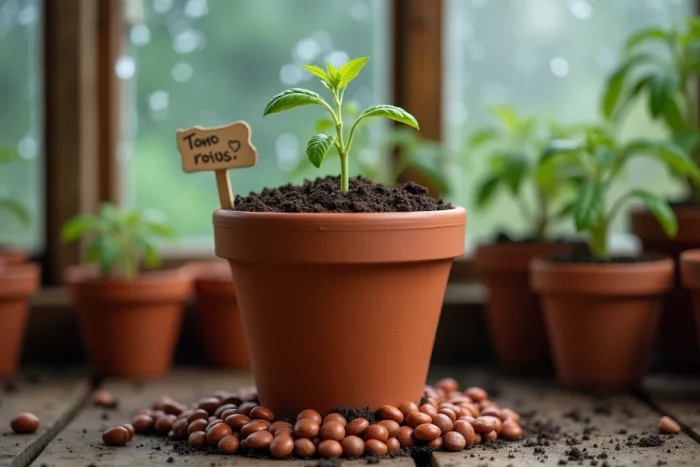
The confusion between the two placements is common. At the bottom of the pot, clay balls create a buffer zone that facilitates the evacuation of excess water through the drainage holes. They prevent the potting soil from compacting at the bottom and blocking drainage.
On the surface, the role is the opposite: we retain moisture instead of evacuating it. Clay balls on the surface act as a mineral mulch, not as a drain.
Combining both placements yields the best results for potted plants:
- At the bottom, a layer of balls (two to three centimeters) separated from the potting soil by a felt, for drainage.
- On top, a thin layer of balls on the substrate, to limit evaporation and protect the superficial roots.
- Between the two, a potting soil suitable for the plant, neither too compacted nor too light.
This combination works well for both indoor plants and outdoor planters.
When clay balls are not the right choice
Plants that need a dry substrate between waterings (cacti, certain succulents) do not benefit from a retention layer on the surface. For these species, a non-porous mineral mulch like gravel or pumice is preferred, which does not retain moisture in the same way.
Similarly, in open ground in the garden, clay balls on the surface have a limited effect. Their lightness makes them vulnerable to wind, and their mulching effectiveness is concentrated on small pot or container surfaces.
The choice to add clay balls above the potting soil therefore depends on the type of plant, the container, and the exposure. For most indoor green plants and flowering balcony planters, it is a simple gesture that permanently alters the moisture comfort of the substrate, without additional maintenance.