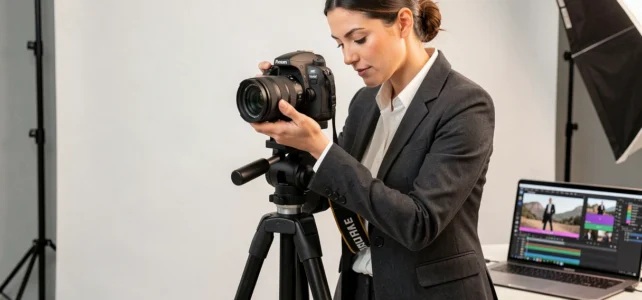
A marketing team receives a brief to present a new service in video format. The shoot is scheduled for three days from now, the budget is tight, and no one internally is skilled in editing. This scenario occurs frequently, and this is exactly where the creation of professional videos is determined: not in the equipment, but in the preparation and concrete decisions made before the shoot.
The video brief that conditions everything else
We often see video projects start without a structured brief. The result: a blurry shoot, endless editing, and a final output that does not match either the message or the intended distribution channel.
An operational brief does not resemble a creative intent note. It establishes three elements above all else: the exact distribution channel, the expected format, and the desired action from the viewer. A video intended for LinkedIn in a square format has nothing to do with a corporate film shown at a trade show.
Specifically, we validate the expected deliverable (duration, aspect ratio, subtitles or not), the main message in one sentence, and the success indicators (number of views, completion rate, clicks to a page). Without these benchmarks, editing becomes an expensive improvisation exercise. Specialized agencies assist with this structuring from the brief phase, as can be seen on https://www.moviecreation.fr/ which offers this type of support from design to delivery.
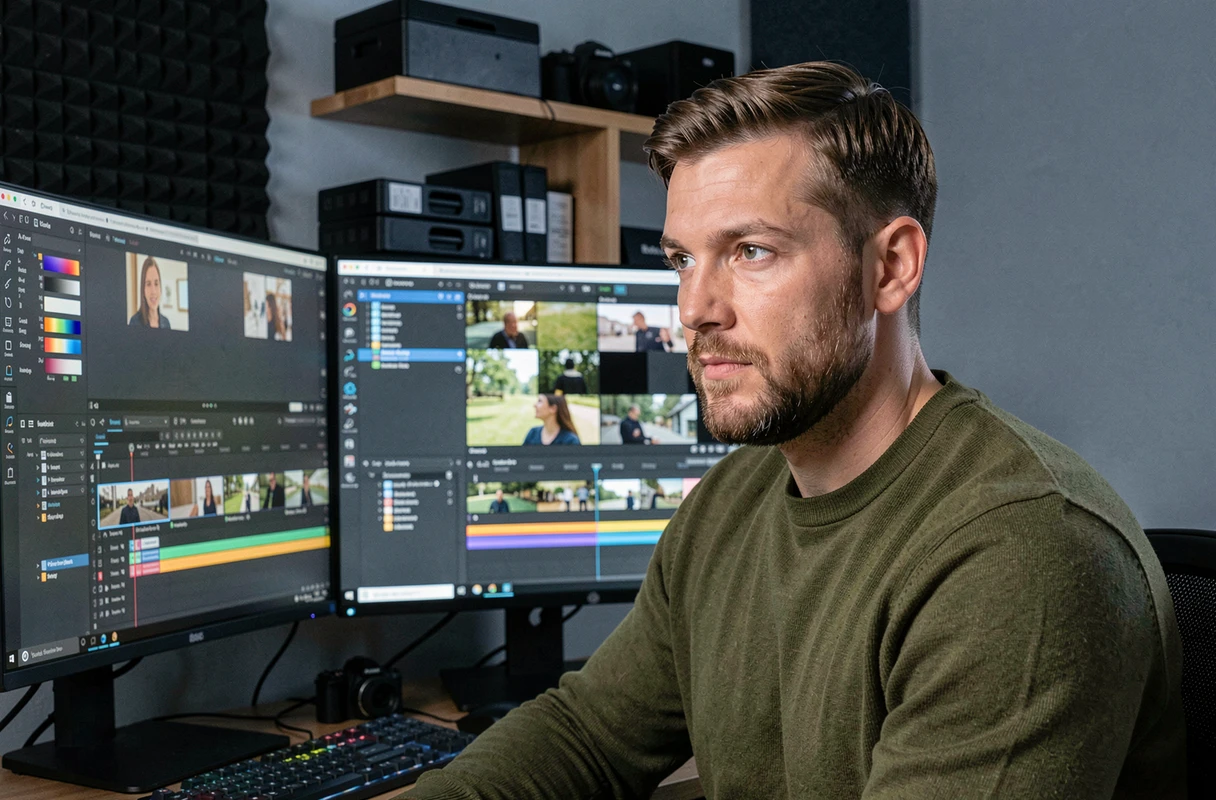
Audio quality and shooting: the material decisions that matter
When the budget is limited, the temptation is to invest in a more powerful camera. On the ground, a decent quality external microphone transforms the output more than a video sensor upgrade. Poor sound loses the viewer’s attention in seconds, while a slightly less sharp image often goes unnoticed if the lighting and framing are well done.
Prioritize sound over image
A wired lavalier microphone plugged into a smartphone already provides a usable result for an interview. Adding light acoustic treatment (a simple absorbing panel or even an open closet behind the camera) reduces reverberation without heavy investment.
Stabilization also matters. A basic tripod or a pocket stabilizer eliminates shakes that immediately signal an amateur video. In summary, the recommended order of investment for a corporate shoot follows this logic:
- External microphone (lavalier or directional), which improves the overall perception of quality more than any other equipment
- Supplementary light source (a portable LED panel is enough to brighten a face indoors)
- Stabilization (tripod or gimbal), especially for moving shots or long interviews
- Camera upgrade, only if the previous three points are already covered
Shooting in batches to reduce production costs
A production workflow designed in batches changes the game. Instead of mobilizing a team for a single shoot, multiple subjects are grouped into the same session. Three interviews filmed on the same day with the same setup take barely more time than one, but produce three distinct pieces of content.
Batching reduces post-production friction: same color grading, same graphic treatment, same editing template. Feedback varies on this point depending on team size, but for a small business that publishes regularly, this batch organization represents a measurable time gain.
The video hook: capturing attention in the first seconds
Most guides talk about “keeping it short.” The real issue is the hook, those very first seconds that decide whether the viewer stays or scrolls. The hook is tested and optimized like a title object, not as a creative effect left to chance.
We analyze the drop-off point of viewers (the retention curve on YouTube or video analytics on LinkedIn) to identify where the audience abandons. If the drop-off occurs before the fifth second, the problem almost always lies in the opening.
Building an effective hook for your audience
A hook that works in corporate communication presents a concrete problem that the audience recognizes. No dramatic music or vague rhetorical questions. We dive straight into the subject with a strong visual or verbal statement.
Examples of structures that capture attention:
- Show the final result within the first second, then explain the process (the “before/after” logic)
- Open with a surprising number or fact related to the industry, immediately followed by context
- Start with a statement made by a client or collaborator, in a close-up, without brand introduction
The hook is not a separate element from the content. It is the first brick of the message, and it must be coherent with what follows. An engaging hook followed by flat content accelerates drop-off instead of preventing it.
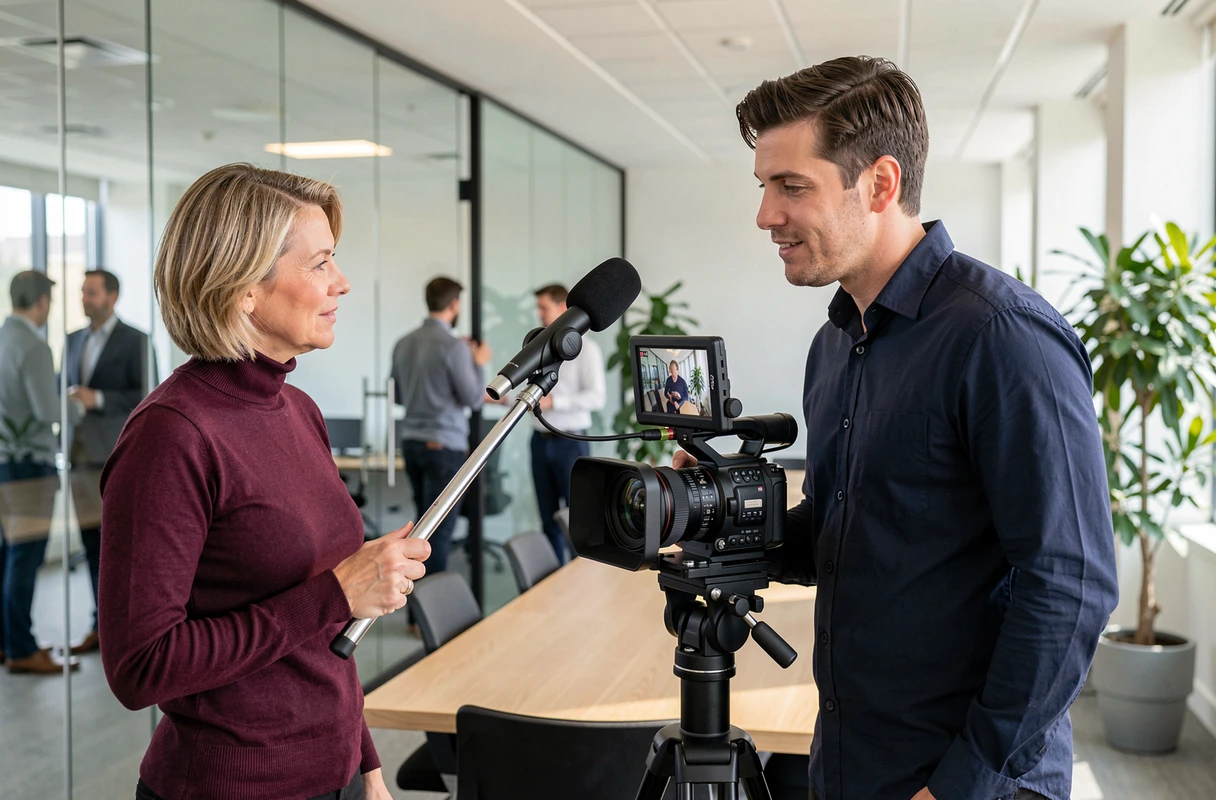
Video editing and distribution: adapting the format to the channel
Editing is not just about cutting and assembling shots. It is the stage where we adapt the raw content to each platform. The same shoot can generate a long version for YouTube, a thirty-second excerpt for Instagram Reels, and a square subtitled format for LinkedIn.
Subtitles are no longer optional. The majority of videos on social media are watched without sound. Integrating readable subtitles (sufficient size, contrast with the background) directly into the editing significantly increases the complete viewing rate.
The editing pace depends on the channel. On social media, we cut dead time, tighten shots, and maintain a brisk pace. For a corporate video shown in a meeting or on a website, we can afford longer shots, smoother transitions, a pace that allows the message to breathe.
Every video must include a clear call to action, tailored to the distribution context: a clickable link on YouTube, a verbal mention on social media, a QR code in a video projected at a trade show. Without this explicit direction, even a well-made video remains passive content that generates no measurable return.
The creation of professional videos relies less on equipment than on the rigor of the brief, the hierarchy of technical investments, and the adaptation to the distribution channel. A well-prepared shoot with a decent microphone and a tested hook produces a more effective result than an expensive production launched without prior framing.