
A solidarity accommodation refers to a lodging provided by an individual or a local organization, equipped to welcome travelers, in a setting where part of the income or exchange directly benefits the host community. This model differs from a traditional tourist rental by the active presence of the host and a commitment to local development.
Solidarity accommodation and traditional tourism: what changes in the welcome contract
In a standard seasonal rental, the relationship between the traveler and the host is limited to a commercial transaction. The owner provides accommodation, the client pays a rate, and interactions often stop at the key handover.
Solidarity accommodation is based on a different principle. The host shares their living environment and daily life, not just a private space. The traveler sleeps in a fully equipped lodging (kitchen, bedding, bathroom), but also accesses a human network: neighbors, artisans, local producers.
The solidarity dimension is reflected concretely. A portion of the stay finances an identified community project: renovation of a school, support for an agricultural cooperative, maintenance of a path. This allocation distinguishes the model from a simple stay with a local resident. Booking a fully equipped accommodation with Tombivouac allows, for example, to combine the comfort of a furnished lodging with this logic of local redistribution.
Under French law, hosting someone free of charge does not constitute a residential lease. There is no legal maximum duration governing this practice. This legal flexibility facilitates solidarity hosting arrangements, provided that the host and the traveler clearly agree on the terms of the stay.
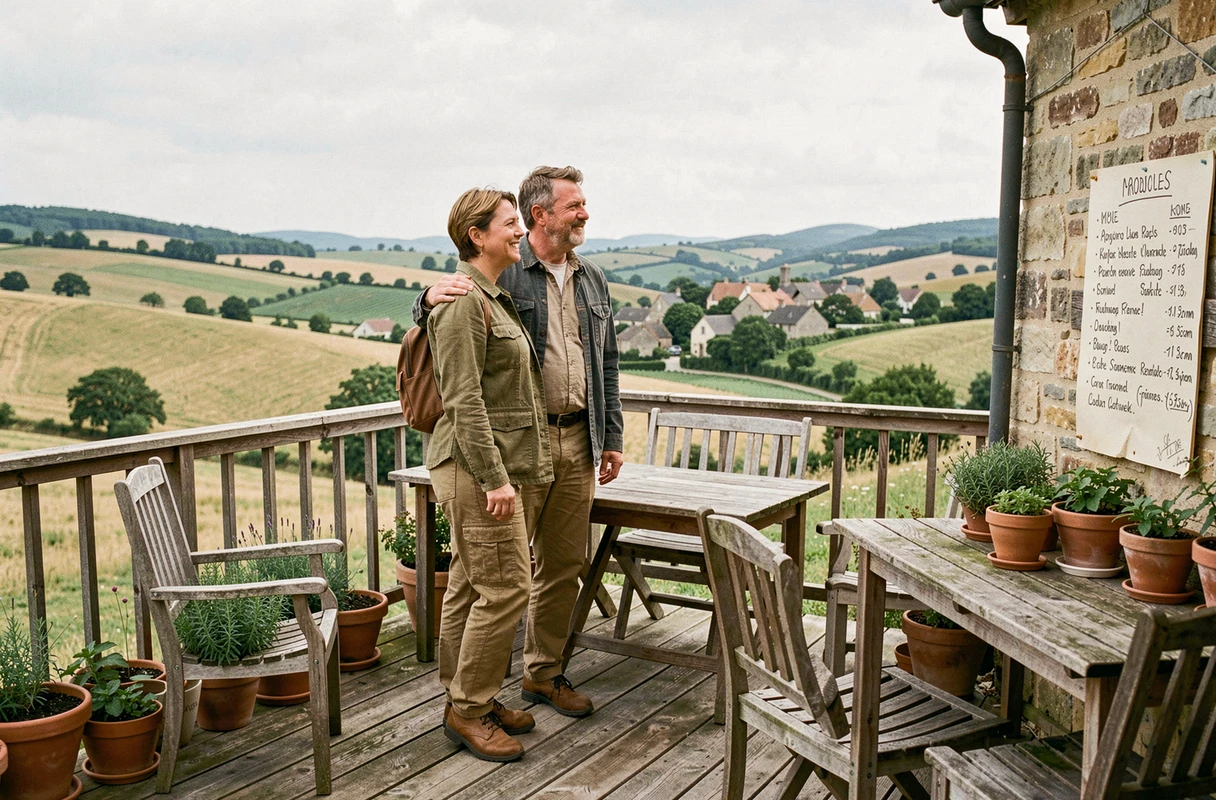
Solidarity tourism: how the stay finances local development
The word “solidarity” is not a decorative label. In serious organizations, each stay generates traceable funding for a local project. The traveler knows before booking what their contribution will finance.
This mechanism takes several forms depending on the destinations and the partners involved:
- A percentage of the stay price is donated to a local association that manages a collective project (access to water, education, crafts)
- The traveler directly participates in a community activity during their stay (planting, construction, workshop for sharing skills)
- The host is themselves an actor in local development, and tourism income complements their main activity (agriculture, crafts, hiking guide)
What differentiates solidarity tourism from voluntourism is the professionalization of the welcome. The traveler is not free labor disguised as a tourist. They pay for a fully equipped stay and contribute financially, without replacing a local job.
The most rigorous organizations publish an annual report of their projects. This level of transparency remains the best indicator to distinguish a true commitment to solidarity from a mere marketing argument.
Immersion with locals: what the traveler gains (and what they accept)
Staying with locals in a solidarity framework offers an immersion that traditional tourist circuits do not replicate. Encounters with locals are not scripted. One shares a meal prepared with products from the nearby market, discovers a craft profession in the workshop adjacent to the house.
This immersion requires mutual adaptation. The comfort of a fully equipped solidarity accommodation is not that of a four-star hotel. The bedding is clean and functional, the equipped kitchen allows for meal preparation, but the setting remains that of a local home.
Some points to consider before booking:
- The level of equipment varies by destination: running hot water in some regions, solar shower in others
- Cohabitation with the host requires respecting schedules and domestic customs that may not be yours
- Rural or isolated areas offer a more authentic experience, but access may require additional travel from the airport or train station
This element of unpredictability is part of the journey. Feedback from travelers on specialized platforms shows that local immersion largely compensates for the comfort gap for those seeking human encounters rather than a standardized stay.

Choosing a fully equipped solidarity stay: the criteria that matter
The number of organizations offering solidarity trips has increased in recent years. Not all are equal. A few criteria allow for effective sorting.
Financial traceability is the first filter. A reliable organization clearly indicates which project receives the funds and publishes reports. If this information is absent from the site, the solidarity dimension is likely superficial.
The level of equipment of the lodging also deserves verification. “Fully equipped” means functional kitchen, bedding, and bathroom, not just a simple room with a mattress. Serious platforms detail the inventory of the lodging in each listing.
The role of local partners is another indicator. In a coherent solidarity model, the host is not an external intermediary renting a property from a distance. They are a resident involved in the life of their community, who earns supplementary income from tourist hosting. This direct relationship ensures that the money from the stay remains in the territory.
The group of travelers constitutes a final parameter. Some solidarity stays operate in small groups to limit the impact on the host community. Others offer individual or couple hosting. The format influences the degree of immersion and the price.
A well-structured solidarity stay relies on a balance between the comfort of the traveler and the real benefit for the local community. Checking these criteria before booking takes a few minutes and avoids disappointments upon arrival.