
The lilac tattooed on the skin goes beyond a simple floral pattern. This spring flower carries a dense symbolic weight, encompassing first love, renewal, and, more recently, militant commitment. Understanding these different layers of meaning allows one to choose a lilac tattoo with full awareness of what it expresses.
Lilac Tattoo and Militant Color: A Meaning Few Floral Patterns Carry
Do you associate lilac with sweetness and tenderness? That’s legitimate, but the lilac color has taken on a political dimension in recent years.
In Brazil, the state of São Paulo illuminates the façade of the Palácio dos Bandeirantes in lilac every year for the month of “Agosto Lilás,” dedicated to the fight against violence towards women. This initiative, continued in August 2026, anchors the hue in a register of resistance and solidarity.
For those who know this reference, a lilac flower tattoo is no longer just a symbol of gentle femininity. It can become a marker of solidarity with victims of violence and personal commitment. This shift in meaning distinguishes lilac from other popular tattoo flowers, such as the rose or lily, which remain more confined to the romantic register.
This militant dimension does not erase traditional meanings. It adds to them, giving the motif a rare depth. One can explore the meaning of the lilac tattoo to better understand how femininity and commitment coexist within this same symbol.
Symbolism of Lilac in Tattoos: First Love, Renewal, and Spirituality
The lilac blooms among the first flowers of spring. In the Victorian language of flowers, it represented first love and youthful innocence. This connection to beginnings, whether romantic or personal, remains the most widespread meaning.
Three Symbolic Registers of Lilac
- First Love and Purity: The white lilac evokes innocence. Many choose this motif to commemorate a foundational relationship or a teenage memory.
- Renewal and Confidence: The spring bloom associates lilac with new beginnings. After a breakup, a loss, or a life change, this tattoo marks the ability to start anew.
- Spirituality and Protection: In European folklore, lilac was believed to ward off evil. Branches were placed at the doors of homes to protect the inhabitants. This mystical meaning persists in some tattoos.
These three registers coexist. The choice of color, style, and placement directs the reading towards one or the other.
Color of the Lilac Tattoo: Each Shade Changes the Message
A deep purple lilac does not tell the same story as a white lilac or a pale pink lilac. Why does this detail matter so much?
Purple, the historical color of lilac, refers to spirituality and mysticism. A tattoo in these dark tones expresses an inner quest or a connection to a form of transcendence.
White directs the motif towards purity and remembrance. A white lilac tattoo often evokes a lost love or a tribute to a deceased person. It is a more melancholic, intimate reading.
Pink, on the other hand, remains in the realm of tenderness and embraced femininity. It is closer to the classic rose, but with an added touch of fragility that the clustered shape of lilac naturally brings.
Discussing the exact shade with your tattoo artist is not just an aesthetic detail. The chosen color determines the first reading that others will make of your tattoo, even before knowing your personal intention.
Style and Placement: Minimalist, Realistic, or Composed Lilac Tattoo
The lilac lends itself to very different styles, which explains its growing popularity.
Minimalist or Realistic: Two Distinct Approaches
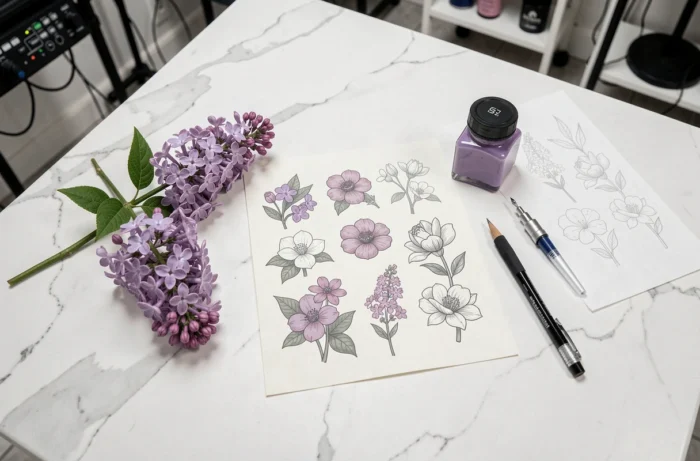
A minimalist lilac tattoo, in fine lines and without color, highlights the shape of the floral cluster. This style is suitable for small placements (wrist, ankle, behind the ear). It prioritizes discretion and personal symbolism.
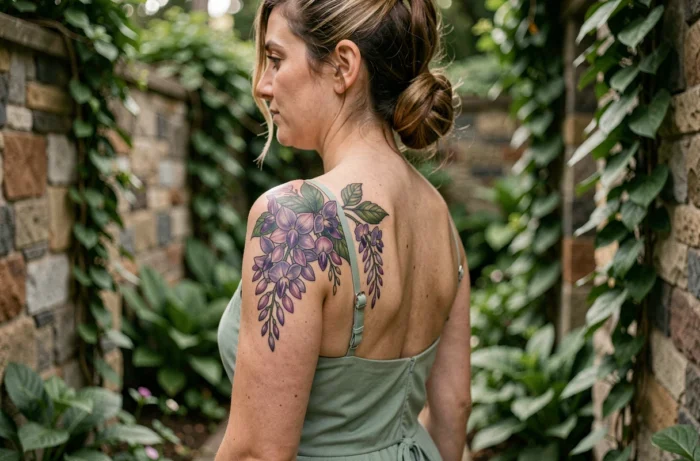
A realistic color tattoo reproduces the natural gradients of the flower. This style requires more surface area (forearm, shoulder, ribs) and an experienced floral tattoo artist. The result is spectacular, but floral realism ages less well without regular touch-ups.
Composing Lilac with Other Motifs
The lilac can be integrated into larger compositions. When associated with butterflies, it reinforces the idea of transformation. Combined with other flowers (peony, lavender), it creates a bouquet where each element carries its own message.
A word of caution: tattoo professionals note that social media encourages the reproduction of standardized motifs. The risk is choosing a “seen and reviewed” composition that loses its personal character. Asking your tattoo artist to design a unique version remains the best way to maintain authentic meaning.
Choosing a Lilac Tattoo with Awareness
The lilac concentrates meanings that few floral motifs bring together: love, renewal, spiritual protection, and, recently, commitment against violence towards women. This symbolic richness makes it a thoughtful choice rather than just a decorative motif.
Before going under the needle, take the time to define the shade of color, graphic style, and placement. These three parameters guide the reading of the tattoo as much as the motif itself. A realistic purple lilac on the forearm and a minimalist white lilac on the wrist do not convey the same message at all.