The choice of a memorial plaque at Jardiland is based on measurable criteria: material durability, readability of the engraving over time, compatibility with cemetery regulations, and actual budget. Comparing these parameters helps avoid disappointments, especially since the legal deadlines for restoring a grave have been shortened.
Durability of memorial plaque materials: granite, plexiglass, and alternatives
The material determines the longevity of the plaque and, by extension, the frequency of maintenance. The ranges available in garden centers fall into three main categories, each with distinctly different properties.
| Material | Weather Resistance | Possible Customization | Indicative Price Range |
|---|---|---|---|
| Granite | Very high (frost, UV, acid rain) | Engraving, gilding, photo medallion | Medium to high |
| Plexiglass / acrylic | Medium (yellowing possible after several years) | Color printing, integrated photo, cut-out shapes | Low to medium |
| Reconstituted stone / resin | Variable depending on manufacturing quality | Molding patterns, finishes imitating natural stone | Low |
Granite remains the material whose durability far exceeds other options. An engraving on granite retains its readability for decades without special treatment.
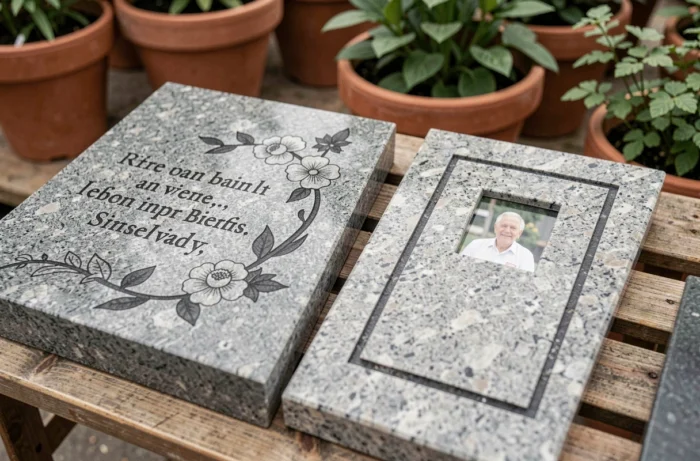
Plexiglass allows for more visual creativity (color photo, heart or tree of life shape). However, prolonged exposure to UV light degrades the surface and can make the text difficult to read after just a few years.
Resin or reconstituted stone plaques offer a low entry price, but their frost resistance varies depending on the manufacturing process. For a cemetery located at altitude or in a region with harsh winters, this choice requires prior verification with the manufacturer.
To delve deeper into the comparison of available ranges, the Jardiland funeral articles on Bazaar & Compagnie detail the customization options available in-store and online.
3DS Law and Restoration Deadline: Why Material Choice Matters More
Since the so-called 3DS law of 2022, the heirs of a burial concession have one year to restore a grave deemed in poor condition after an official inspection by the municipality. The previous deadline was three years.
This shortening changes the game at the time of purchase. A plaque that fades, whose text erases, or that has a cracked corner can lead the municipality to classify the grave as poorly maintained. The procedure for reclaiming the concession then becomes possible, with tight deadlines to react.
Direct consequence: investing in a durable material reduces the risk of a formal notice. The initial extra cost of a engraved granite plaque, compared to a resin plaque with printing, pays off by the absence of premature replacement.
Points to Check Before Purchase
- The text marking technique: a mechanical engraving in the mass withstands better than a surface print, which can fade due to UV and rain
- Compatibility with the cemetery’s internal regulations: some municipalities impose maximum dimensions, specific materials, or prohibit adhesive fixings
- The warranty offered by the manufacturer or distributor: a multi-year warranty on the readability of the engraving is a reliable quality indicator
Customization of a Jardiland Memorial Plaque: Designs, Text, and Online Simulators
The demand for personalized plaques is growing strongly in the French funeral market. Symbolic designs (Tree of Life, hearts, doves) are among the most requested. Digital simulators, accessible from a computer or phone, allow you to visualize the result before ordering.
At Jardiland, customization covers several levels:
- The text: first name, dates, quote, or personal message, with choice of font and engraving color
- The design: catalog of symbols or uploading a personal image (photo of the deceased, landscape, animal)
- The shape of the plaque: classic rectangle, heart, open book, oval, or custom cut according to ranges
- Complementary accessories: porcelain photo medallion, integrated vase, matching base
The online simulator avoids layout errors and allows you to compare several versions before confirming. Checking the preview at actual scale (dimensions displayed in centimeters) remains the best way to ensure that the text will be readable once the plaque is placed on the grave.
Maintenance of a Memorial Plaque: Frequency and Suitable Products by Material
Maintenance conditions the perceived lifespan of the plaque, regardless of its intrinsic resistance. A granite plaque is cleaned with clear water and neutral soap, without abrasive products. Lichens can be removed with a soft brush, possibly supplemented by a waterproofing treatment once a year.
Plexiglass requires more precautions. Alcohol or ammonia-based cleaners scratch the surface and accelerate yellowing. A damp microfiber cloth is sufficient in most cases.
For resin plaques, regular rinsing prevents moss buildup. The fixing joints deserve an annual inspection, as their degradation exposes the plaque to wind and impacts.
Recommended Frequency
Cleaning every three to four months maintains the readability of the text and the overall appearance of the grave. Before All Saints’ Day, a more thorough cleaning (removal of green deposits, checking fixings) prepares the grave for the busiest visiting period.
The choice of material at the time of purchase determines the maintenance burden throughout the duration of the concession. Balancing the initial budget, resistance to local weather conditions, and available time for maintenance remains the most reliable method for selecting a suitable memorial plaque, whether at Jardiland or elsewhere.