Finding a foundation that lasts under an FFP2 mask in the middle of summer or hesitating between a nude makeup and a bold color palette: concrete choices are multiplying in the beauty aisles. The beauty trends of 2025-2026 are not just keywords on social media. They are changing the composition of cosmetic products, daily routines, and expectations from brands.
Plant-based PDRN and biotech actives: what K-Beauty is changing in our skincare
K-Beauty has been talked about for years, but the current wave has little to do with sheet masks and ten-step routines. At the Cosmobeauty Seoul 2026 fair, launches are focused on functional cosmetics with a high concentration of actives, emphasizing clinical performance rather than attractive packaging.
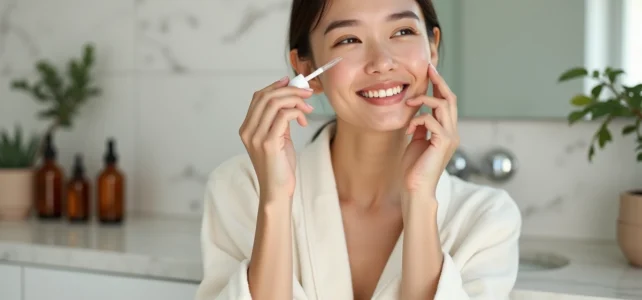
The ingredient that keeps popping up: PDRN (polydeoxyribonucleotide), an active previously associated with clinical treatments. Several Korean brands now offer it in a plant-based form, integrated into serums and creams available without a prescription. The idea is to stimulate skin regeneration without the need for injections.
Another format gaining ground: dissolvable microneedle patches. They are applied to a targeted area (frown lines, eye contour), the micro-points dissolve into the skin and release the active ingredient directly. Feedback varies on this point depending on skin type and wrinkle depth, but the principle is appealing because it avoids a trip to the dermatologist for a first level of care.
By following beauty news on Mes Conseils Beauté, one can quickly spot which biotech actives are moving from the lab to the consumer shelves.
Maximalist makeup: color takes back the ground from nude
The hashtag #maximalistmakeup has increased by over 180% in a year on TikTok in the United States. On Instagram, “Creative Makeup” content has risen by over 60% year-on-year, and “Colorful Makeup” has climbed by over 50% quarter-on-quarter. These figures reflect a tangible shift in usage.
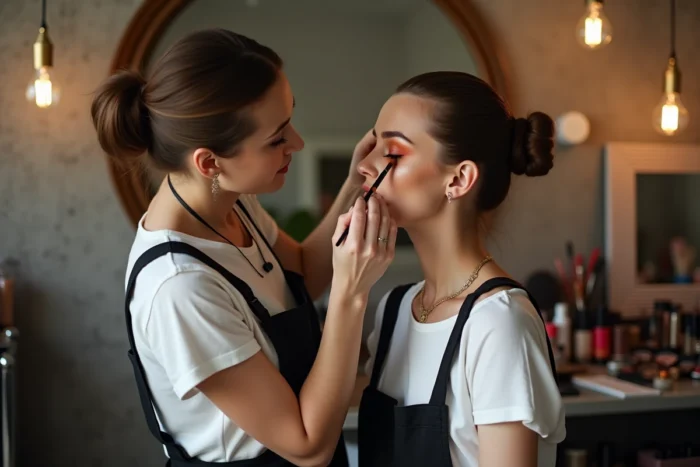
In practice, we are seeing more and more looks worn during the day (not just in the evening or on runways) featuring pigmented eyeshadows, graphic liners, and combinations of matte and iridescent textures on the same face. The no-makeup-makeup look has not disappeared, but color is becoming a daily gesture again, not an event.
For those who want to try without investing in a full palette:
- Start with a single point of color, such as a colored liner on the upper eyelid, and keep the rest of the face neutral.
- Favor cream textures over powder for a more blended finish, especially on dry or mature skin.
- Use a makeup setting spray to prevent pigments from migrating throughout the day.
Clean and eco-friendly cosmetics: beyond the label
The word “clean” appears on an increasing number of packages, but it does not correspond to any unique regulatory definition. On the ground, the question we are most often asked is simple: how to distinguish a product genuinely formulated with safe ingredients from one that is riding the trend?
Looking at the INCI list remains the most reliable gesture. The first three or four ingredients represent the bulk of the formula. A serum that highlights hyaluronic acid but lists it at the end contains a negligible amount of this active.
Sustainability is no longer limited to formulas. Brands are investing in refillable packaging, deposit glass bottles, and dispensing systems that reduce waste in hospitality and institutes. This evolution also affects luxury, where the refillable case becomes a selling point as much as an environmental choice.
Natural actives and biotechnology: the boundary fades
Natural cosmetics and lab cosmetics are often opposed. In reality, the most effective actives combine both approaches. A plant extract can be optimized through fermentation to increase its bioavailability. A synthetic peptide can replicate the action of a molecule found in nature, but in a stable and controlled concentration.
The relevant criterion is no longer “natural or synthetic” but “effective and well-tolerated.” Organic labels (Cosmebio, Ecocert) remain a useful reference for the traceability of raw materials, provided they are not the sole decision filter.
Beauty and health: the convergence that redefines cosmetic products
The boundary between skincare and health is narrowing. We talk about nutricosmetics to refer to dietary supplements that target the skin, hair, or nails from the inside. The principle is not new, but research on the skin microbiome and the gut-skin axis provides a more solid foundation for these products.
A topical serum and an oral supplement do not act on the same mechanisms. The former treats the surface and the superficial layers of the epidermis. The latter intervenes via the bloodstream and systemic inflammation. Combining them can make sense, but a supplement does not replace a suitable skincare routine.
This convergence is also pushing spas and institutes to offer hybrid protocols, combining facial treatments and nutritional assessments. Innovation in this sector is not only coming from formulas but also from how they are integrated into a holistic approach to skin health.
The beauty trends that truly mark daily life are those that change a gesture, an ingredient, or a purchasing reflex. Plant-based PDRN in serum, a turquoise liner worn on a Tuesday morning, an INCI list read before checking out: it is at this scale that beauty is evolving concretely.