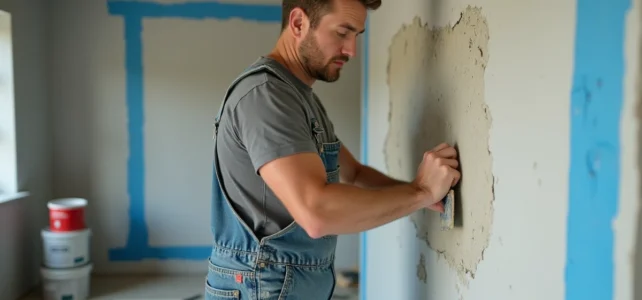
Residential renovation is not just about choosing paint or comparing quotes. As soon as the project involves the structure, thermal envelope, or networks, regulatory and technical constraints affect the final result, budget, and timeline. We review the points that general public guides often overlook.
RE2020 Additional Costs for House Extensions and Elevations
Any significant extension or elevation of an existing dwelling triggers the application of RE2020. According to the Monbatiment Price Observatory, the transition from RT2012 to RE2020 represents an additional cost of 5 to 10% for a 100 m² individual house, which amounts to between 8,000 and 18,000 euros extra for this type of surface.
The average cost per square meter under RE2020 is now around 1,900 to 2,200 euros, compared to 1,450 to 1,650 euros under the old RT2012. We recommend incorporating this item right from the sketch phase, even before consulting an architect, to avoid the classic budget tunnel effect during the construction process.
This additional cost is not solely related to insulation. It includes requirements for summer comfort (air circulators, solar protections), the use of bio-sourced materials, and the sizing of ventilation systems. When you find Cécile Bricole’s renovation tips, note that these items are often underestimated in standard budget forecasts.

Order of Intervention for Trades on a Renovation Site
Poor phasing of work generates more additional costs than the choice of materials. This is a recurring observation on residential sites managed without project management. The issue does not stem from the quality of the craftsmen, but from the sequence of interventions.
The logical sequence for a heavy renovation follows a simple principle: work from the structural elements to the finishes, and from top to bottom.
- Demolition and structural reinforcement (load-bearing walls, floors, framework) before any network installation, to avoid costly rework
- Dry networks (electricity, home automation) and wet networks (plumbing, heating) before closing the partitions, to allow for embedding and pressure testing
- Insulation and plastering once the networks are validated, followed by flooring, interior woodwork, and painting last
A common mistake is to lay the kitchen tiles before the plumber has completed their connections. The result: drilling through the new covering, redoing joints, wasting time and materials. We observe this scenario on a significant portion of self-managed projects.
Specific Case of Internal Insulation
Internal thermal insulation (ITI) modifies the dimensions of each room. It is necessary to recalculate the location of electrical outlets, water inlets, and woodwork before laying the first panel. Any insulation installed before the networks are in place will need to be cut and redone, with a risk of thermal bridging at each poorly treated crossing.
Choosing Insulation Materials: Balancing Thermal Performance and Moisture Management
The thermal resistance coefficient (R) is not enough to choose an insulator. The permeability to water vapor, expressed by the mu coefficient, determines the wall’s behavior over time. A thermally efficient insulator that is impermeable to vapor, installed on an old stone wall, traps moisture and causes structural issues within a few years.
For older buildings, prioritize a breathable insulator (wood fiber, hemp wool, cellulose wadding) to protect the existing wall. For a recent construction in concrete block or concrete, synthetic insulators (expanded polystyrene, polyurethane) remain relevant due to their thickness/performance ratio.
Vapor Barrier or Vapor Retarder: Do Not Confuse
The vapor barrier completely blocks vapor migration. The vapor retarder regulates it. In a renovation of an old house, a hygroscopic vapor retarder adapts its permeability to the ambient humidity level. Installing a tight vapor barrier on a rammed earth or stone wall ultimately condemns the wall.
The choice between these two membranes depends on the type of support, the chosen insulator, and the planned ventilation system. Without a functional mechanical ventilation system, no internal insulation strategy will last over time.

Safety on Domestic Construction Sites: Risks Underestimated by Individuals
Renovation work carried out by individuals generates a high number of domestic accidents each year. Falls from height, even from a step ladder, are the leading cause of serious injury on a residential site.
- Silica dust during tile or concrete cutting: wear at least an FFP2 mask and work outdoors or with source extraction
- Asbestos in floor tiles, tile adhesives, and flue pipes in houses built before 1997: an asbestos diagnosis before work is mandatory for common areas, and strongly recommended for individual houses
- Electrical risk when removing outlets or running cables through existing partitions: turn off the main circuit breaker, not just the branch circuit breaker, and check for the absence of voltage with a voltage absence tester (VAT)
Renting a rolling scaffold costs much less than a fracture. We systematically recommend scaffolding rather than a ladder for any work above two meters, including simply painting a ceiling.
Insurance and Prior Declaration
Before starting work that modifies the exterior appearance of the building (facade renovation, window replacement, roof modification), a prior declaration at the town hall remains mandatory. Home insurance rarely covers damages related to unreported work. Check your multi-risk insurance policy and request an extension of construction coverage if necessary.
A well-managed renovation project relies less on the accumulation of good ideas than on mastering the technical constraints that frame each intervention. Phasing, choosing materials suitable for the existing building, and considering recent regulatory obligations, particularly RE2020 for extensions, make the difference between a controlled site and a financial pit.